
Impara da Qualsiasi Fonte: PDF, Audio, YouTube
TikoNote è lo strumento di studio multi-modale definitivo. Carica registrazioni audio, incolla link YouTube o importa PDF. La nostra AI unifica tutto in un formato di studio coerente.
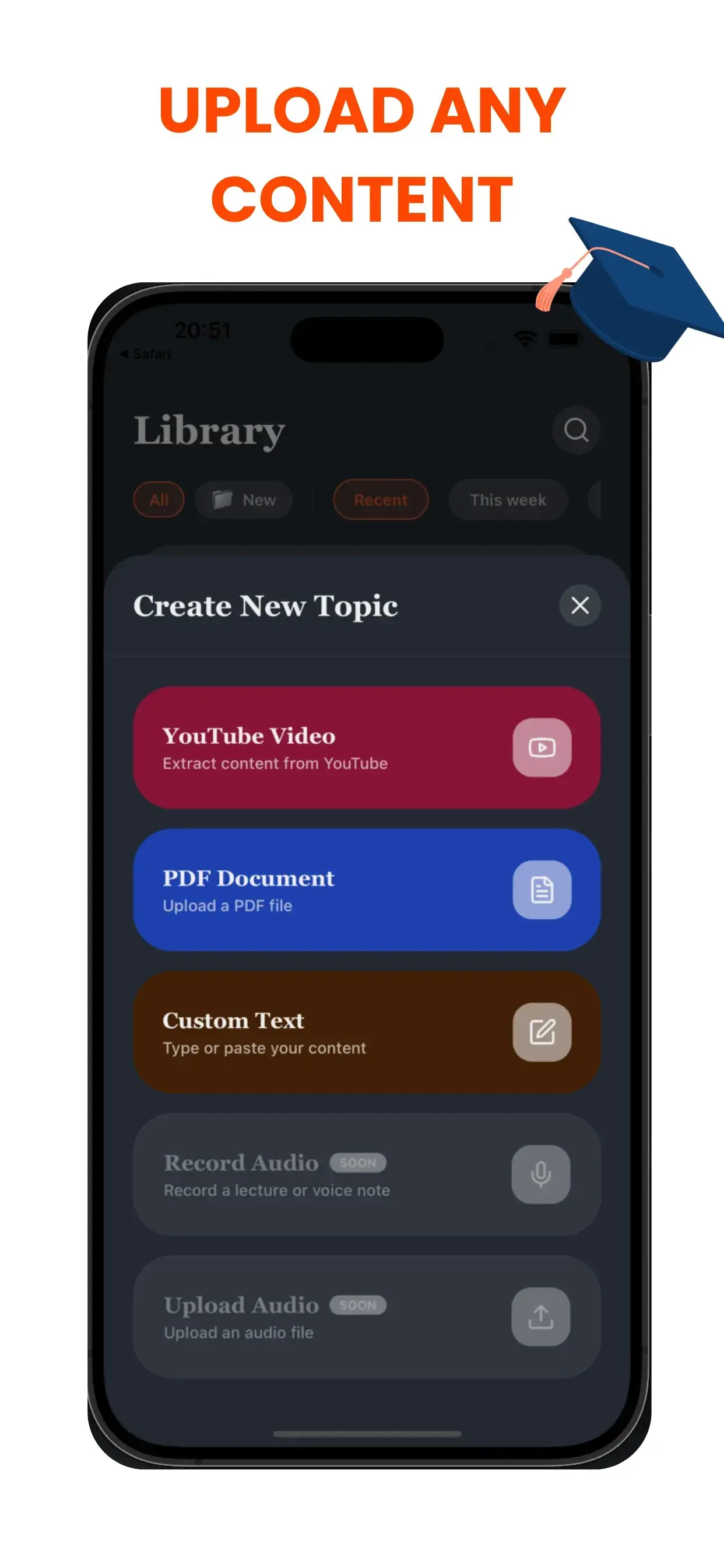
L'Hub di Studio All-in-One
Gli studenti moderni non imparano solo dai libri di testo. Impari da podcast, tutorial YouTube, registrazioni di lezioni Zoom e dispense manoscritte. TikoNote unifica tutti questi diversi formati in un'unica base di conoscenza centrale.
Trascrizione Audio ad Alta Precisione
Registra la lezione del tuo professore sul telefono e lascia che TikoNote si occupi degli appunti. Il nostro motore di trascrizione converte il parlato in testo con alta precisione, filtrando anche "ehm" e "uhm", poi lo organizza in appunti strutturati.
Motore YouTube-to-Notes
YouTube è praticamente la più grande aula del mondo. Incolla l'URL di un video educativo, e TikoNote lo "guarderà" per te. Estrae la trascrizione, riassume la lezione e genera un quiz—così puoi trattenere le informazioni senza creare appunti personalizzati manualmente.
PDF, Immagini e Documenti
Hai una scansione di una pagina di un libro di testo? Un mazzo di slide? TikoNote usa OCR ed estrazione di testo per estrarre le informazioni grezze dai tuoi file statici e trasformarli in materiali di studio interattivi.
High-Accuracy Audio Transcription
Record your professor's lecture on your phone and let TikoNote handle the note-taking. Our transcription engine converts speech to text with high accuracy, even filtering out "umms" and "ahhs", then organizes it into structured notes.
YouTube-to-Notes Engine
YouTube is practically the world's biggest classroom. Paste a educational video URL, and TikoNote will "watch" it for you. It extracts the transcript, summarizes the lesson, and generates a quiz—so you can retain the information without creating custom notes manually.
PDF & Image & Documents
Have a scan of a textbook page? A slide deck? TikoNote uses OCR and text extraction to pull the raw information out of your static files and turns them into interactive study materials.
Domande frequenti su l'apprendimento multimodale
- Come genera TikoNote l'apprendimento multimodale dai miei file?
- Carica qualsiasi PDF, registrazione audio o link YouTube e TikoNote genera automaticamente i materiali di studio in meno di un minuto.
- Quali formati di file supporta TikoNote?
- TikoNote supporta PDF, DOCX, PPTX, file audio (MP3, WAV), video MP4 e link YouTube.
- TikoNote è gratuito?
- TikoNote offre un piano gratuito per la tua prima nota. I piani Premium partono da $9,99/mese per generazioni illimitate.
- TikoNote funziona in più lingue?
- Sì. TikoNote elabora contenuti in oltre 12 lingue e genera risultati nella lingua del documento sorgente.
- Posso usare TikoNote su smartphone?
- Sì. TikoNote ha app per iOS e Android, oltre a una versione web completa sincronizzata su tutti i dispositivi.
Pronto a studiare in modo più intelligente?
Unisciti a migliaia di studenti che usano TikoNote per superare gli esami con meno stress.