AIマインドマップで複雑なトピックを可視化
難解なテキストをクリアで視覚的なマインドマップに変換。TikoNoteは乱雑なノートを論理的な図に自動的に構造化し、全体像を把握する必要がある視覚学習者に最適です。
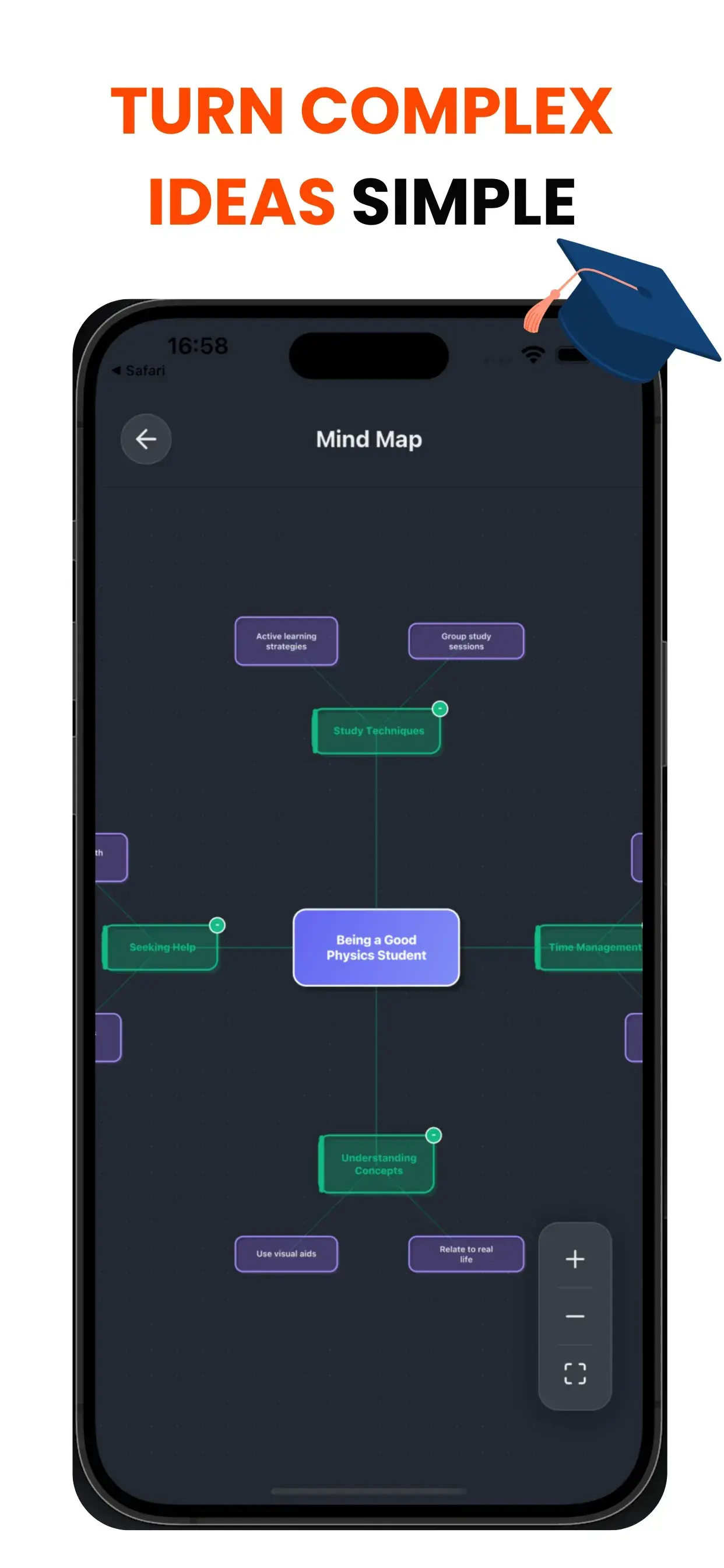
視覚的学習の力
人口の65%が視覚学習者であることをご存知ですか? 従来の線形なノートでは、アイデア間の「全体像」のつながりを捉えられないことがよくあります。マインドマッピングは情報を空間的に整理することで、脳が自然に概念を関連付ける方法を模倣し、この問題を解決します。
混乱から明快さへ
TikoNoteは、乱雑なノート、難解な教科書の章、または長い音声文字起こしを、美しく論理的なマインドマップに自動的に構造化します。
- 関係の特定: サブトピックがメインテーマとどのように関連しているかを即座に確認できます。
- 詳細の掘り下げ: 核となる概念から始めて、具体的な詳細へと分岐させることができます。
- 記憶のアンカー: キーワードや事実を視覚的なノードとして分離し、記憶のトリガーとして機能させます。
最適なユースケース
当社のユーザーは、以下のシーンでAIマインドマップを活用しています:
- 歴史の試験に向けたタイムライン作成
- 生物学における分類と体系化
- エッセイの構成と論証の構造化
- ノンフィクション本の一章全体の要約
From Confusion to Clarity
TikoNote takes your messy notes, dense textbook chapters, or long audio transcripts and structures them into beautiful, logical mind maps automatically.
- Identify Relationships: See how sub-topics relate to the main theme instantly.
- Drill Down: Start with the core concept and branch out into specific details.
- Memory Anchors: Isolate key terms and facts as visual nodes to act as memory triggers.
Perfect Use Cases
Our users love using AI Mind Maps for:
- Timeline creation for History exams
- Taxonomy and classification in Biology
- Essay planning and argument structuring
- Summarizing entire non-fiction book chapters
Why Mind Maps Improve Learning
The brain stores information in networks of associated concepts — not linear lists. Mind maps mirror this structure. A 2019 study in the Journal of Educational Psychology found students who studied with concept maps scored 23% higher on transfer tests than those who re-read the same material.
TikoNote's AI mind maps go further than manual ones: they automatically identify hierarchical relationships, cluster related concepts, and surface connections between sections of your material that you might otherwise miss.
Mind Maps for Different Subjects
Biology & Medicine: Upload your anatomy PDF and get a mind map showing organ systems, sub-structures, and functional relationships — a visual you can drill before practicals.
History & Humanities: Convert a lecture on World War I into a cause-and-effect map showing political, economic, and social factors branching from central events.
Law: Generate a map of a legal doctrine showing exceptions, case precedents, and statutory sources as branches — the big picture before drilling individual cases.
Computer Science: Upload a textbook chapter on algorithms and get a map showing complexity classes, families, and applications.
How to Create an AI Mind Map
- Upload your source — drag and drop a PDF, paste a YouTube link, or record live audio.
- Select Mind Map — choose "Mind Map" from the output options panel.
- Review the map — TikoNote generates an interactive, zoomable mind map in 30–60 seconds.
- Explore and annotate — click any node to expand details; add personal notes to branches.
- Export or share — download as PNG/PDF or share via link with classmates.
Frequently Asked Questions
- Can TikoNote generate mind maps from PowerPoint files?
- Yes. Upload any PPTX file and TikoNote extracts slide content and generates a mind map showing how topics relate.
- How detailed are TikoNote's AI mind maps?
- TikoNote generates 3–5 levels of depth for a standard lecture — typically 1 central node, 5–8 main branches, and 3–6 sub-nodes per branch.
- Can I edit the generated mind map?
- Yes. Every node is editable — rename branches, add nodes, delete sections, and reorganise the structure to match your mental model.
- Does mind mapping work for group study?
- Yes. Share a mind map link with your study group — everyone can explore the same interactive map without needing a TikoNote account.
- What languages are supported?
- TikoNote generates mind maps in the language of your source material — upload a French PDF and get a French mind map. 12+ languages are supported.
