AI 마인드맵으로 복잡한 주제 시각화하기
빽빽한 텍스트를 명확하고 시각적인 마인드맵으로 변환하세요. TikoNote는 지저분한 노트를 논리적인 다이어그램으로 자동 구조화하여 큰 그림을 봐야 하는 시각적 학습자에게 완벽합니다.
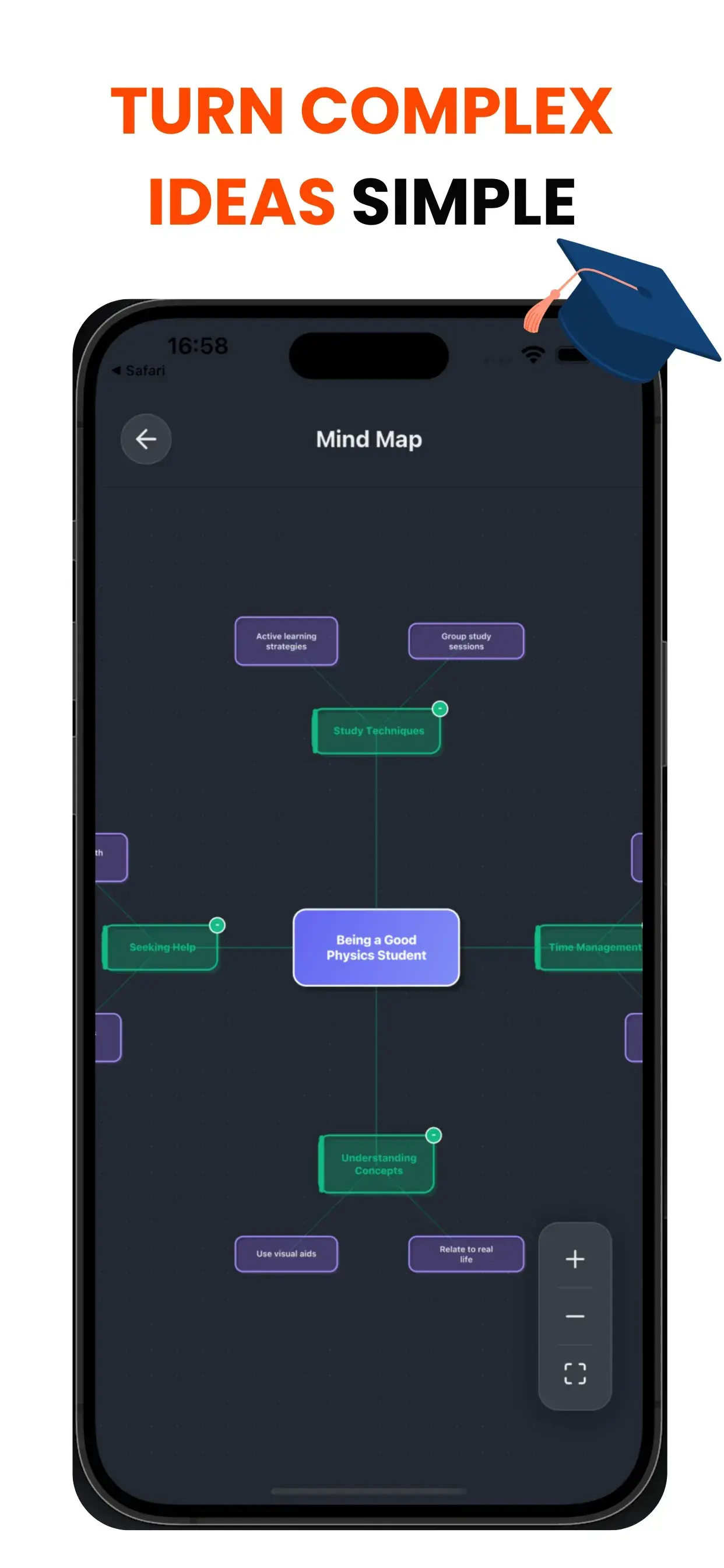
시각적 학습의 힘
인구의 65%가 시각적 학습자라는 사실을 알고 계셨나요? 전통적인 선형 노트는 아이디어 간의 "큰 그림" 연결을 포착하지 못하는 경우가 많습니다. 마인드맵은 뇌가 자연스럽게 개념을 연상하는 방식과 유사하게 정보를 공간적으로 정리하여 이 문제를 해결합니다.
혼란에서 명확함으로
TikoNote는 지저분한 노트, 빽빽한 교과서 챕터 또는 긴 오디오 대본을 아름답고 논리적인 마인드맵으로 자동 구조화합니다.
- 관계 파악: 하위 주제가 주요 테마와 어떻게 관련되는지 즉시 확인하세요.
- 심층 탐구: 핵심 개념에서 시작하여 구체적인 세부 사항으로 뻗어나가세요.
- 기억 앵커: 주요 용어와 사실을 시각적 노드로 분리하여 기억 트리거로 활용하세요.
완벽한 활용 사례
우리 사용자들은 다음과 같은 경우에 AI 마인드맵을 즐겨 사용합니다:
- 역사 시험을 위한 타임라인 생성
- 생물학의 분류 체계 정리
- 에세이 계획 및 논증 구조화
- 비문학 서적 전체 챕터 요약
From Confusion to Clarity
TikoNote takes your messy notes, dense textbook chapters, or long audio transcripts and structures them into beautiful, logical mind maps automatically.
- Identify Relationships: See how sub-topics relate to the main theme instantly.
- Drill Down: Start with the core concept and branch out into specific details.
- Memory Anchors: Isolate key terms and facts as visual nodes to act as memory triggers.
Perfect Use Cases
Our users love using AI Mind Maps for:
- Timeline creation for History exams
- Taxonomy and classification in Biology
- Essay planning and argument structuring
- Summarizing entire non-fiction book chapters
Why Mind Maps Improve Learning
The brain stores information in networks of associated concepts — not linear lists. Mind maps mirror this structure. A 2019 study in the Journal of Educational Psychology found students who studied with concept maps scored 23% higher on transfer tests than those who re-read the same material.
TikoNote's AI mind maps go further than manual ones: they automatically identify hierarchical relationships, cluster related concepts, and surface connections between sections of your material that you might otherwise miss.
Mind Maps for Different Subjects
Biology & Medicine: Upload your anatomy PDF and get a mind map showing organ systems, sub-structures, and functional relationships — a visual you can drill before practicals.
History & Humanities: Convert a lecture on World War I into a cause-and-effect map showing political, economic, and social factors branching from central events.
Law: Generate a map of a legal doctrine showing exceptions, case precedents, and statutory sources as branches — the big picture before drilling individual cases.
Computer Science: Upload a textbook chapter on algorithms and get a map showing complexity classes, families, and applications.
How to Create an AI Mind Map
- Upload your source — drag and drop a PDF, paste a YouTube link, or record live audio.
- Select Mind Map — choose "Mind Map" from the output options panel.
- Review the map — TikoNote generates an interactive, zoomable mind map in 30–60 seconds.
- Explore and annotate — click any node to expand details; add personal notes to branches.
- Export or share — download as PNG/PDF or share via link with classmates.
Frequently Asked Questions
- Can TikoNote generate mind maps from PowerPoint files?
- Yes. Upload any PPTX file and TikoNote extracts slide content and generates a mind map showing how topics relate.
- How detailed are TikoNote's AI mind maps?
- TikoNote generates 3–5 levels of depth for a standard lecture — typically 1 central node, 5–8 main branches, and 3–6 sub-nodes per branch.
- Can I edit the generated mind map?
- Yes. Every node is editable — rename branches, add nodes, delete sections, and reorganise the structure to match your mental model.
- Does mind mapping work for group study?
- Yes. Share a mind map link with your study group — everyone can explore the same interactive map without needing a TikoNote account.
- What languages are supported?
- TikoNote generates mind maps in the language of your source material — upload a French PDF and get a French mind map. 12+ languages are supported.
