
What Is an AI Study App? How It Works and Why It Improves Grades
The phrase "AI study app" is everywhere — but what does it actually mean? Not every app that says "AI" actually uses artificial intelligence in a meaningful way, and not all AI features are equally useful for learning.
This guide explains exactly what an AI study app is, how the technology works, and what the research says about whether it actually improves outcomes.
What Is an AI Study App?
An AI study app is a learning tool that uses artificial intelligence to personalize, automate, or enhance some aspect of the study process. That's a broad definition — intentionally so, because AI study apps vary enormously in what they actually do.
At the useful end of the spectrum:
- AI that generates quiz questions from your notes (active recall at scale)
- AI tutors that ask Socratic questions to guide you toward understanding
- AI that identifies which concepts you keep getting wrong and prioritizes them
- AI that transcribes and summarizes lectures to reduce note-taking friction
At the less useful end:
- AI that generates generic summaries of topics you haven't uploaded (no personalization)
- AI chatbots that answer questions without any connection to your actual course material
- AI features behind paywalls that add marginal value over a non-AI version
The Technology Behind AI Study Apps
Large Language Models (LLMs)
Most AI study apps are built on top of LLMs — the same technology behind ChatGPT, Claude, and Gemini. These models can read text (your notes, PDFs, lecture content) and generate contextually relevant questions, explanations, summaries, and feedback.
What this means for students: An LLM-powered app can generate quiz questions from your specific lecture notes — not generic questions about a topic, but questions that match your professor's emphasis and terminology. This personalization is what makes them genuinely more useful than generic flashcard sets.
Spaced Repetition Algorithms
The best AI study apps combine LLMs with spaced repetition algorithms (like SM-2) that schedule which questions to show you and when. The AI generates the questions; the algorithm decides when you need to review them based on your past performance.
This combination — AI for personalization, SR for scheduling — is what separates effective apps from apps that just call themselves AI. See Spaced Repetition Explained.
Adaptive Learning
Some apps track your performance across all your answers and adapt the difficulty and focus of questions to your specific knowledge gaps. Instead of asking you every question with equal frequency, the app shows hard questions more often and easy questions less.
This mirrors what a good tutor does naturally — but automatically, at scale.
How TikoNote Uses AI
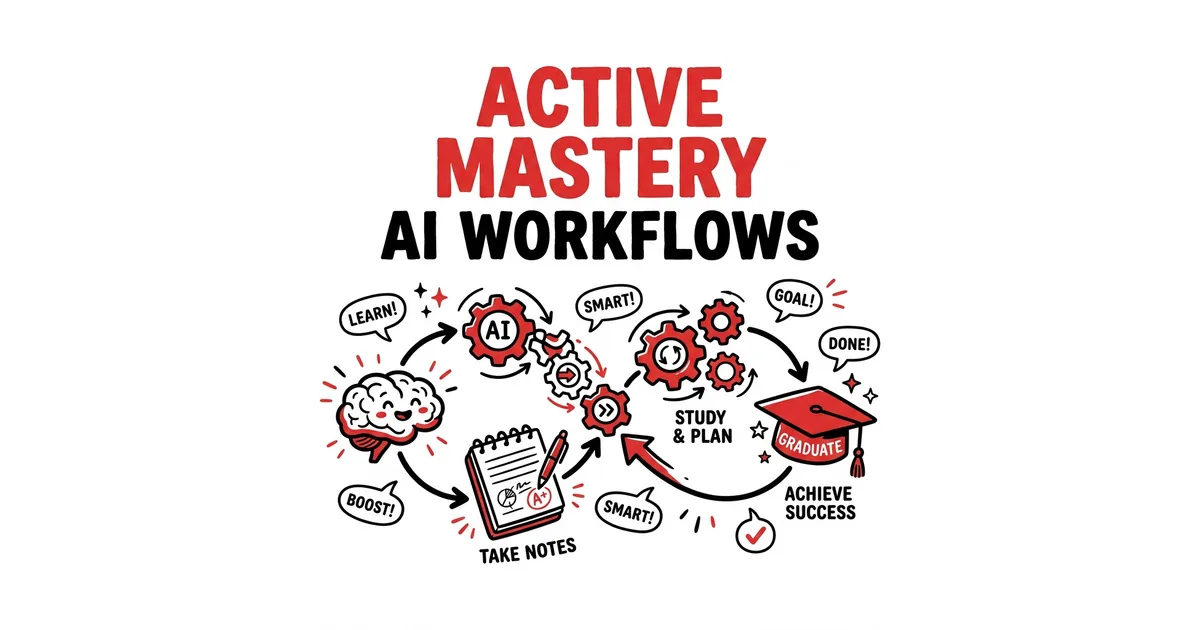
TikoNote is an example of an AI study app that combines multiple techniques:
- Document processing: Upload a PDF or notes. The AI reads and understands your content.
- Quiz generation: The AI generates high-quality Q&A questions from your specific material.
- Feynman AI Tutor: The AI prompts you to explain concepts in your own words, then evaluates your explanation and identifies gaps — simulating the Feynman Technique.
- Spaced repetition: Generated questions are scheduled for review at optimal intervals.
- Gap tracking: The app tracks which concepts you consistently struggle with and surfaces them more often.
👉 See how TikoNote works — free trial
Does AI Actually Improve Grades? What the Research Shows
The research on AI tutoring systems is positive — though it's important to distinguish between types of AI.
Intelligent Tutoring Systems (ITS)
A meta-analysis by VanLehn (2011) found that intelligent tutoring systems produce effect sizes of 0.76 compared to traditional classroom instruction — roughly equivalent to moving a student from the 50th to the 79th percentile. Well-designed AI tutors are nearly as effective as human one-on-one tutoring.
Modern LLM-based apps are more flexible than earlier ITS systems — they can handle any subject, any level, and any content you upload.
Active Recall Automation
The primary mechanism through which AI study apps improve grades is automating active recall. Research consistently shows that testing yourself is more effective than rereading. AI apps make that testing automatic — you don't have to manually create practice questions, which is the friction that prevents most students from doing active recall.
When you remove the friction from an evidence-based practice, more students do it. When more students do it, outcomes improve.
Personalization Effect
Generic study materials don't match your specific course. An AI that generates questions from your actual lecture notes produces more relevant practice — and relevant practice produces better transfer to the actual exam.
What to Look for in an AI Study App
Not all AI study apps are worth your time. Evaluate them on:
1. Does it work with your specific materials? Apps that only generate questions on generic topics (not your uploaded notes) are less useful than apps that process your actual content.
2. Does it use active recall? If the app primarily shows you information (passive), it's less effective than an app that tests you (active). See Active Recall vs Passive Review.
3. Does it have a genuine free tier? Many "AI" apps put all meaningful features behind a paywall. The best tools — TikoNote, Anki, Khanmigo — provide real value at zero cost.
4. Does it track your performance and adapt? Static quiz sets are just digital flashcards. Adaptive systems that track your accuracy and adjust scheduling are meaningfully better.
Frequently Asked Questions
Is an AI study app the same as an AI tutor?
Not always. Some AI study apps focus on content organization and quiz generation (TikoNote, Anki). Some focus on tutoring and explanation (Khanmigo, TikoNote's Feynman Tutor). The best apps combine both. A pure AI tutor focuses on conversation and explanation; a pure quiz app focuses on testing.
Can AI study apps replace human tutors?
For content explanation and practice question generation: increasingly yes, for many subjects. For motivation, accountability, and complex feedback on writing or argument quality: not yet. They're best understood as a force multiplier — extending what a good tutor would do into your study sessions between tutoring appointments.
Do AI study apps work for every subject?
Generally yes, as long as you can provide text-based input. STEM, humanities, social sciences, law, medicine — LLMs can generate meaningful questions from notes in any discipline. Physical skills (lab techniques, surgery, instruments) obviously require practice, not questioning.
Are AI study apps cheating?
Using an AI tool that quizzes you, explains concepts, or organizes your notes is entirely legitimate — equivalent to using a study guide or tutoring service. Using AI to complete assignments you're supposed to do yourself is a different matter. Every app in this guide is firmly in the first category.
Which AI study app has the best free tier?
TikoNote's free tier covers quiz generation and Feynman Tutor access. Anki's desktop version is completely free. Khanmigo has free access through Khan Academy. Between these three, most students can build an effective AI study workflow at zero cost. See Best Free AI Study Apps 2026.
The Bottom Line
An AI study app is worth using if it automates or augments active learning — specifically, if it helps you practice retrieving information from memory, identifies what you don't know, and adapts to your specific gaps.
The best ones make evidence-based study methods (active recall, spaced repetition, Feynman) accessible to everyone — without requiring you to understand the science, set up complex systems, or spend hours making flashcards.
That's the value proposition. And for most students, it's genuinely worth trying.
Put this into practice — right now.
Upload a PDF, lecture slide, or YouTube link. TikoNote instantly generates quizzes, flashcards, and a Feynman session from your own material — not generic internet content.
- ✓ Works on any PDF, video, or audio
- ✓ Active recall built-in — not passive summaries
- ✓ Used by 50,000+ students
Written by TikoNote Team
AI learning researchers & cognitive science enthusiasts building tools that help students study smarter with evidence-based methods like active recall, spaced repetition, and the Feynman Technique.