What Is Feynman AI?
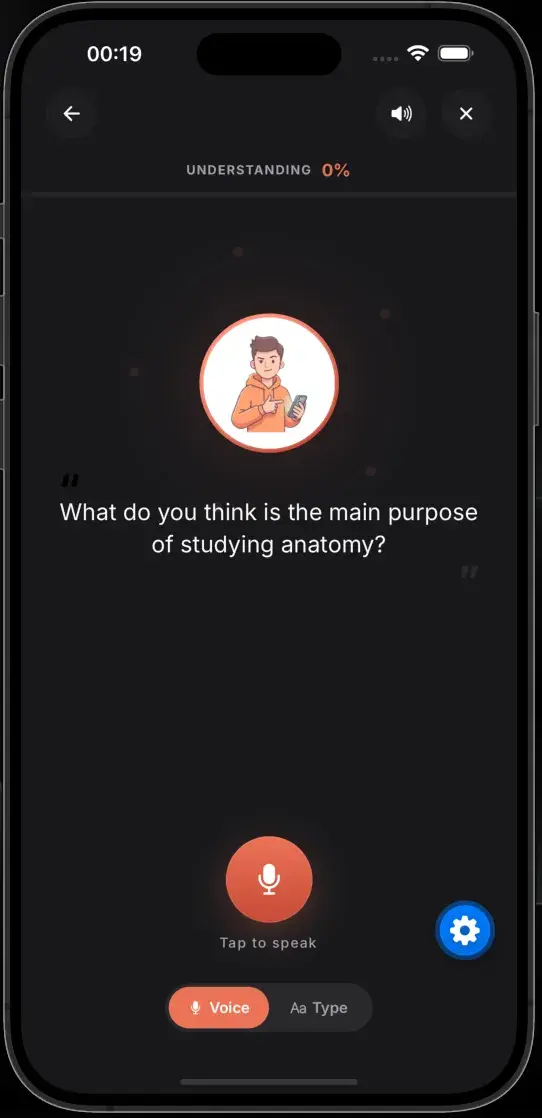
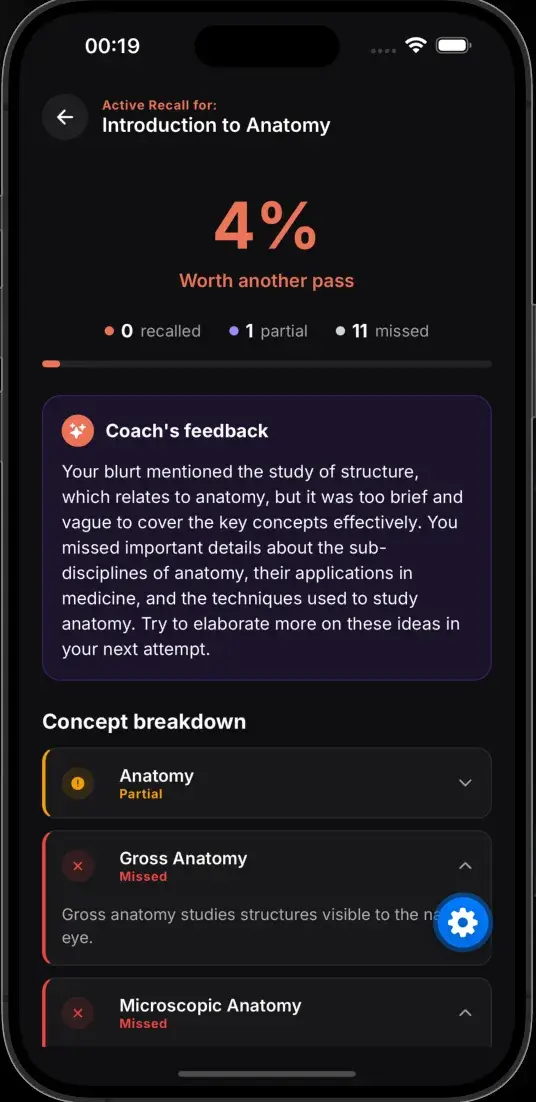
Feynman AI is an artificial intelligence tutor that uses the Feynman Technique — the learning method developed by Nobel Prize-winning physicist Richard Feynman — to help students master any topic by forcing them to explain concepts in their own words. When your explanation has gaps, the AI identifies exactly where your understanding breaks down and guides you to fill those holes.
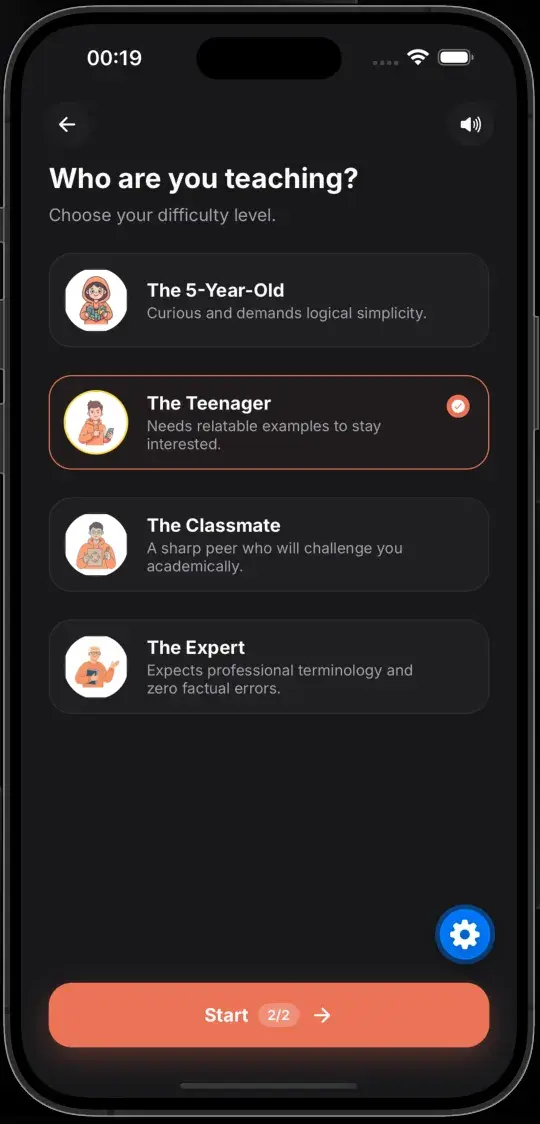
Unlike regular AI chatbots that simply answer questions, Feynman AI makes you do the thinking. It presents a concept from your uploaded study material and asks: "Explain this in your own words." Then it evaluates your explanation, catches misconceptions, and helps you build genuine understanding.
How the Feynman Technique Works with AI
The original Feynman Technique has four steps:
- Choose a concept — Pick something you need to learn
- Explain it simply — Teach it as if to a 12-year-old
- Identify gaps — Find where your explanation breaks down
- Simplify and refine — Go back, re-learn the gaps, try again
TikoNote's Feynman AI automates steps 2–4. You explain, the AI evaluates, identifies gaps, and guides your re-learning. What used to require a human tutor now happens instantly with AI.
Feynman AI vs Regular AI Chatbots
| Feature | TikoNote Feynman AI | ChatGPT | Notewave |
|---|---|---|---|
| Makes you explain | ✅ Core feature | ❌ Gives answers | ⚠️ Basic |
| Gap detection | ✅ Pinpoints errors | ❌ No evaluation | ❌ No |
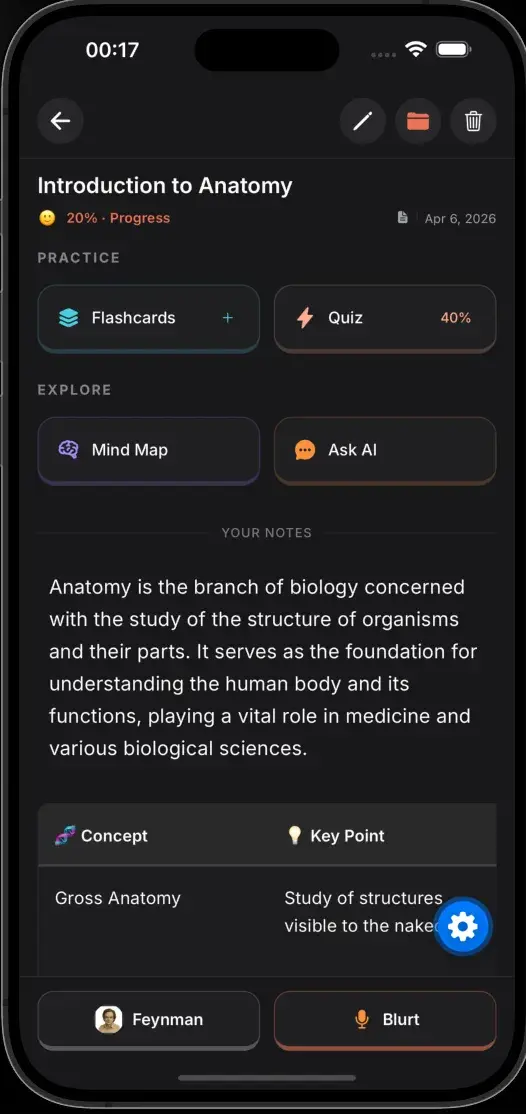
| Your study materials | ✅ PDF, YouTube, notes | ⚠️ Paste only | ✅ Audio, PDF |
| Flashcards + quizzes | ✅ Auto-generated | ❌ Manual only | ✅ Basic |
| Mind maps | ✅ Visual maps | ❌ Text only | ✅ Basic |
| Spaced repetition | ✅ Built-in | ❌ No | ❌ No |
| Progress tracking | ✅ Per-topic mastery | ❌ No memory | ❌ No |
| Free tier | ✅ Yes | ✅ Yes | ✅ Yes |
Why Explaining Beats Memorizing
Research by Roediger & Karpicke (2006) demonstrated that students who practiced retrieval — explaining what they learned — retained 50% more material after one week than students who simply re-read. The Feynman Technique is the purest form of retrieval practice: if you can explain it, you understand it. If you can't, you know exactly what to study next.
What Students Use Feynman AI For
- Medical students — Explaining biological mechanisms reveals whether you truly understand pathways or just memorized names
- Engineering students — Teaching back thermodynamics or circuit analysis exposes formula-level vs conceptual understanding
- Law students — Explaining legal doctrines in plain language reveals gaps in case comprehension
- Language learners — Explaining grammar rules forces production, not just recognition
- Exam prep — Any student preparing for any exam benefits from Feynman-style self-testing
Frequently Asked Questions
Is Feynman AI free?
Yes. TikoNote offers a free tier that includes Feynman AI Tutor sessions, quiz generation, and mind maps. Premium plans starting at $9.99/month unlock unlimited AI generations and advanced features.
How is Feynman AI different from ChatGPT for studying?
ChatGPT gives you answers. Feynman AI makes you produce answers, then evaluates them. This is the critical difference: passive consumption vs active retrieval. Feynman AI builds understanding; ChatGPT provides information.
Can I use Feynman AI with my own PDFs and notes?
Yes. Upload any PDF, paste your notes, or share a YouTube link. The Feynman AI Tutor works from your actual study materials, making every session directly relevant to your exams.
Does Feynman AI work for all subjects?
The Feynman Technique works for any subject that requires understanding — from physics and biology to history and philosophy. If you can explain it, you understand it. Feynman AI applies this principle to every subject.
What is the Feynman Technique?
The Feynman Technique is a learning method named after physicist Richard Feynman. It involves explaining a concept in simple terms, identifying where your explanation breaks down, and re-studying those specific gaps. It's widely considered one of the most effective study methods in cognitive science. Learn more about the Feynman Technique →