What Is the Feynman Technique?
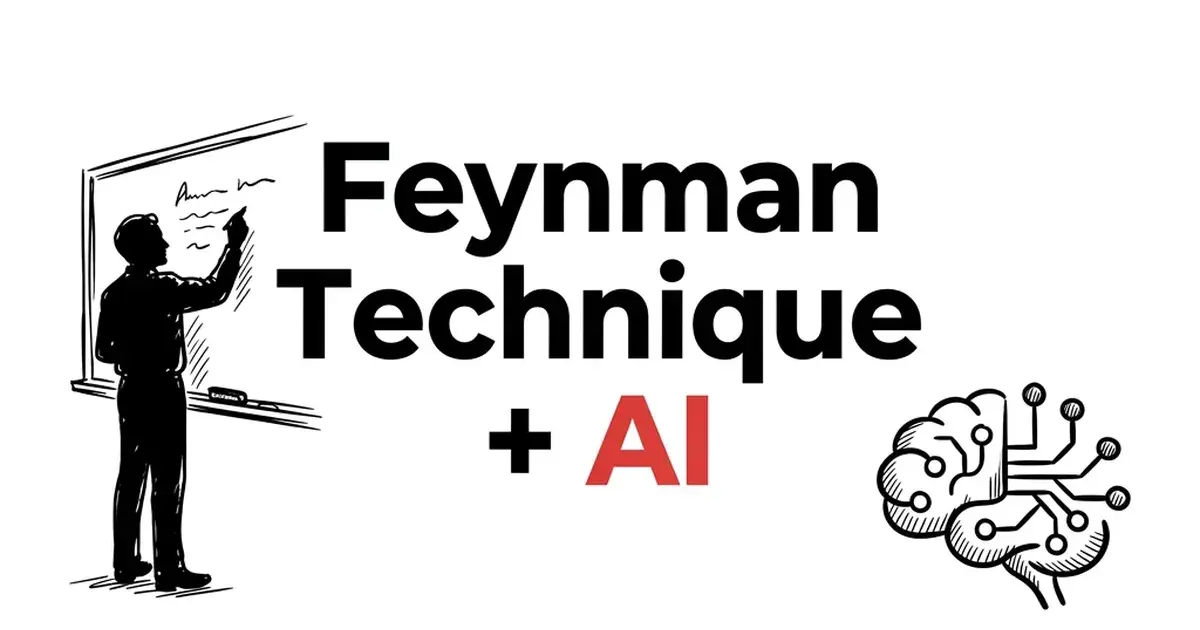
The Feynman Technique is a learning method named after Nobel Prize-winning physicist Richard Feynman. The core principle: if you can explain something simply, you understand it. If you can't, you've found your knowledge gap. It's consistently ranked as one of the most effective study methods by cognitive science research.
The 4 Steps of the Feynman Technique
- Choose a concept you want to understand
- Explain it in simple language — as if teaching a 12-year-old, without jargon
- Identify where your explanation breaks down — these are your knowledge gaps
- Go back to the source, fill the gaps, and try again until your explanation flows smoothly
This cycle of explain → identify gaps → re-learn → explain again is why the Feynman Technique produces deeper understanding than passive methods like re-reading or highlighting. Full guide to the Feynman Technique →
How AI Supercharges the Feynman Method
The traditional Feynman Technique has one limitation: you need to evaluate your own explanation. Most students can't objectively assess whether their understanding is complete or whether they're fooling themselves with surface-level knowledge.
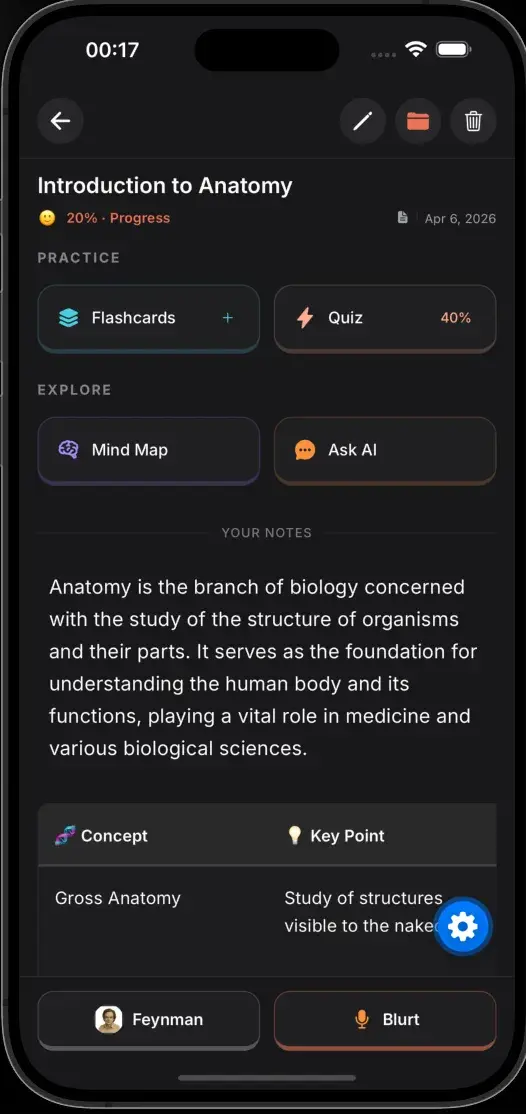
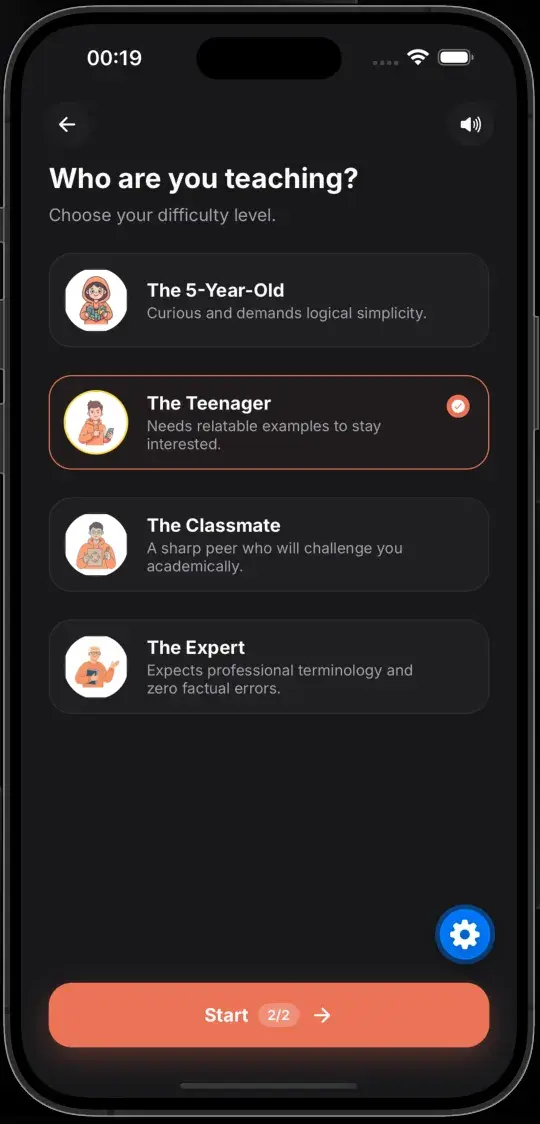
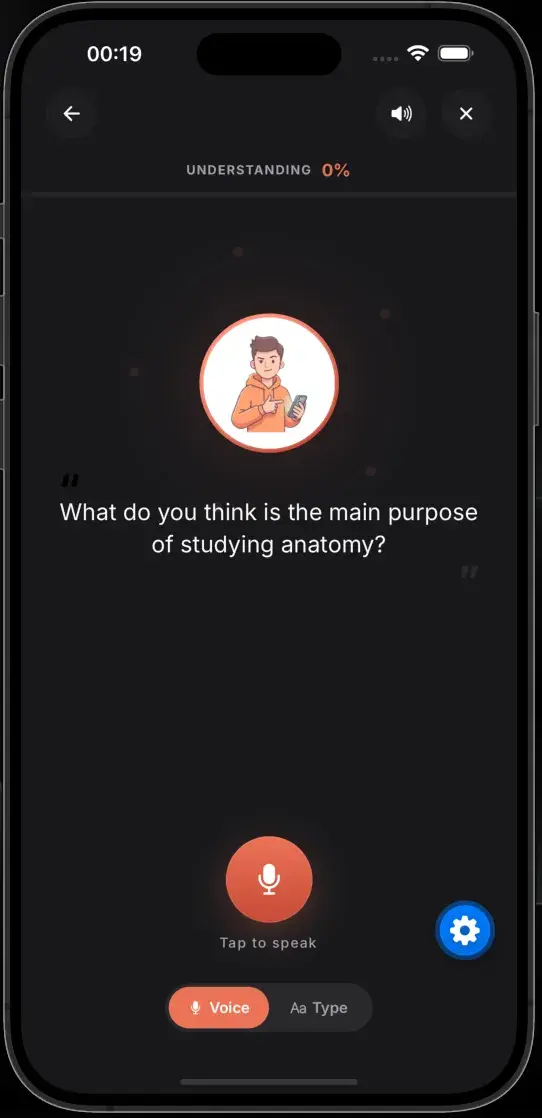
AI removes that limitation. TikoNote's Feynman AI Tutor:
- Reads your study material and selects key concepts to test
- Asks you to explain each concept in your own words
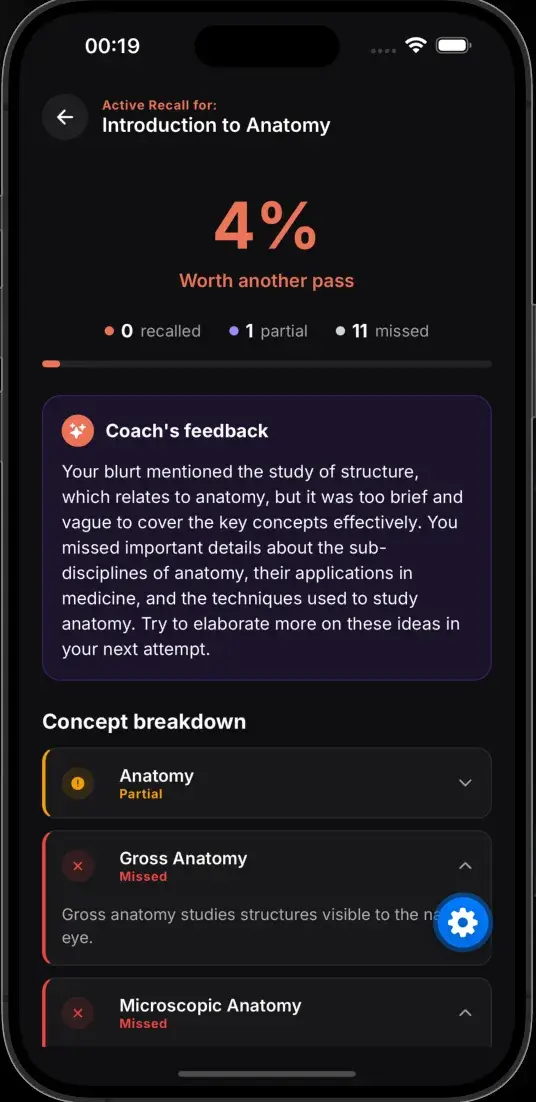
- Evaluates your explanation against the source material
- Identifies specific misconceptions, missing details, and logical gaps
- Guides you to the exact sections you need to re-study
This is like having a patient, knowledgeable tutor available 24/7 — one that never gets tired of asking "Can you explain that more clearly?"
Feynman AI vs Passive Study Methods
| Method | Active Recall? | Identifies Gaps? | Builds Understanding? | Effectiveness |
|---|---|---|---|---|
| Feynman AI (TikoNote) | ✅ Yes | ✅ Automatic | ✅ Deep | ⭐⭐⭐⭐⭐ |
| Manual Feynman Technique | ✅ Yes | ⚠️ Self-assessed | ✅ Deep | ⭐⭐⭐⭐ |
| Practice testing | ✅ Yes | ✅ Via wrong answers | ⚠️ Moderate | ⭐⭐⭐⭐ |
| Flashcards | ✅ Yes | ⚠️ Limited | ⚠️ Surface | ⭐⭐⭐ |
| Re-reading notes | ❌ No | ❌ No | ❌ Illusion | ⭐ |
| Highlighting | ❌ No | ❌ No | ❌ Illusion | ⭐ |
Which Subjects Work Best with Feynman AI?
- STEM subjects — Physics, chemistry, biology, mathematics, engineering. Feynman AI excels at exposing whether you understand mechanisms vs just memorized formulas
- Medical sciences — Anatomy, pharmacology, pathophysiology. Explaining biological pathways reveals true understanding
- Law — Legal doctrines, case analysis, statutory interpretation. Explaining in plain language reveals comprehension gaps
- Business & Economics — Market models, financial concepts, management theories
- Humanities — History, philosophy, literature analysis. Explaining themes and arguments reveals depth of engagement
If a subject requires understanding (not just memorization), the Feynman Technique with AI is the optimal study method. See which subjects work best →
Frequently Asked Questions
Is the Feynman Technique the best study method?
Research consistently ranks active recall methods (including the Feynman Technique) as the most effective study strategies. A 2013 meta-analysis by Dunlosky et al. rated practice testing as the highest-utility study technique. The Feynman Technique is a specialized form of practice testing focused on explanation and understanding.
Can AI really evaluate my understanding?
Modern AI language models can compare your explanation against source material, identify missing concepts, catch incorrect statements, and assess whether your explanation demonstrates surface-level or deep understanding. It's not perfect — but it's dramatically better than self-assessment.
How long should a Feynman AI session be?
20–30 minutes is optimal. Each session covers 3–5 concepts from your uploaded material. Shorter sessions are fine for quick review; longer sessions risk cognitive fatigue. TikoNote tracks your progress so you can pick up where you left off.
Does Feynman AI replace a human tutor?
For concept explanation and gap identification, Feynman AI approaches human-tutor effectiveness. For emotional support, accountability, and essay feedback, human tutors remain superior. The ideal setup: use Feynman AI for daily practice, save human tutoring for complex questions.
How do I get started with Feynman AI?
Download TikoNote (free), upload one PDF or set of notes, and start your first Feynman AI session. The AI will guide you through explaining concepts and show you exactly where your understanding needs work. Step-by-step guide →