
10 Best AI Study Apps for Students in 2026 (Tested and Ranked)
AI didn't just change how we work — it changed how students learn. The best AI study apps in 2026 don't just store notes: they turn your existing materials into personalized quizzes, explain concepts Socratically, build mind maps from PDFs, and adapt to exactly what you keep getting wrong.
This ranked list is based on actual functionality, not marketing. Here's what's worth your time.
What Makes an AI Study App Worth Using?
Not every app with "AI" in the description deserves the label. The best apps:
- Work with your existing materials — they process your notes, slides, PDFs, not generic content
- Use active learning — they quiz you, not just display information (see What Is Active Recall?)
- Adapt to what you don't know — they identify and target your weaknesses
- Save time — they automate the tedious parts (making flashcards, generating summaries)
With that filter, here are the ten worth using.
1. TikoNote — Best Overall AI Study App
Best for: Students who want a complete AI-powered study system in one app.
Price: Free tier; Pro from $9.99/month
TikoNote combines three things most apps separate: note organization, AI comprehension testing (Feynman AI Tutor), and automatic quiz/flashcard generation from your own study materials.
Upload a PDF, lecture notes, or recorded audio — TikoNote generates a structured summary, creates a quiz deck to test your understanding, and provides a Feynman Tutor that asks you to explain concepts back in your own words.
Standout features:
- AI Feynman Tutor: asks you to explain concepts, identifies knowledge gaps
- Automatic quiz generation from any uploaded content
- PDF and audio note processing
- Spaced repetition on generated quizzes
- Mind map generation from notes
Why it's #1: It's the only app that explicitly targets understanding (via Feynman) in addition to retention. Most apps optimize for the latter; both matter. See Why the Feynman Technique Is the Best Study Method.
2. Anki with AnkiGPT — Best for Automated Flashcard Creation
Best for: Anki users who want AI-assisted card generation.
Price: Anki free; AnkiGPT from $5/month
Anki remains the gold standard for spaced repetition (see 5 Best Spaced Repetition Apps). AnkiGPT adds AI card generation: paste text, and it creates optimized cloze and Q&A cards automatically. Combines the best SR algorithm with AI card creation.
3. Notion AI — Best for AI-Powered Note Organization
Best for: Students who already use Notion for notes and want AI augmentation.
Price: Notion AI add-on $10/month on top of Notion subscription
Notion AI summarizes long notes, generates study questions from your content, explains concepts inline, and helps organize complex topics into structured outlines. Not a dedicated study app — but if you live in Notion, it's a powerful upgrade.
4. Khanmigo (Khan Academy AI) — Best Free AI Tutor for Fundamentals
Best for: Students who need concept explanation and tutoring support.
Price: Free (Khan Academy) / $4/month for full access
Khanmigo is Khan Academy's AI tutor — Socratic by design. It doesn't give you answers; it asks questions that guide you to understanding. Excellent for STEM subjects where understanding mechanism matters more than memorizing facts.
The Socratic method is essentially the Feynman Technique externalized — both force you to articulate understanding rather than recognize information.
5. Quizlet AI (QChat) — Best for Social Studying with AI
Best for: Students who study collaboratively and want AI assistance in a familiar platform.
Price: Quizlet Plus from $7.99/month includes AI features
Quizlet's QChat integrates conversational AI into its existing flashcard platform. It explains concepts from your card decks, generates new practice questions based on weak spots, and provides Socratic guidance on topics you're struggling with. Familiar interface, meaningfully improved with AI.
6. Elicit — Best for Research-Heavy Subjects
Best for: Students doing literature reviews, research papers, or academic research.
Price: Free tier; Pro from $10/month
Elicit uses AI to search and summarize academic papers. Instead of finding a paper and reading it, you describe what you're looking for and Elicit surfaces relevant studies with AI-generated summaries and key findings. Invaluable for research-intensive work.
7. Otter.ai — Best for AI-Powered Lecture Transcription
Best for: Students who want to convert lectures into searchable, structured notes.
Price: Free tier; Pro from $8.33/month
Otter records and transcribes lectures in real time, then uses AI to identify key points, generate summaries, and create action items. Reduces in-class note-taking friction dramatically — you can focus on understanding during the lecture and review the structured transcript after.
8. Photomath / Mathway — Best for STEM Problem-Solving
Best for: Math, physics, and engineering students who need step-by-step explanations.
Price: Free; Plus versions available
Point your camera at a math problem, get a step-by-step solution with explanation. The key value isn't the answer — it's the explanation of why each step works, which supports understanding (vs. just copying the answer). Works best when you use it as a teaching tool, not a shortcut.
9. Consensus — Best for Science and Research-Based Subjects
Best for: Students in medicine, psychology, social sciences who need literature-backed answers.
Price: Free searches; Pro from $9.99/month
Consensus searches peer-reviewed literature and summarizes what the research actually says on a topic. Ask "does spaced repetition improve long-term retention?" and get a synthesis of 10+ studies. Excellent for research papers and evidence-based arguments.
10. Perplexity — Best for Fast AI-Powered Research
Best for: Quick research and concept exploration during study sessions.
Price: Free; Pro from $20/month
Perplexity combines LLM answers with real-time web search and cites sources. It's faster than ChatGPT for research tasks and more reliable for fact-checking. Useful for quickly understanding context around a topic before diving deeper with your course materials.
Comparison Table
| App | Best For | AI Feature | Price |
|---|---|---|---|
| TikoNote | Complete study system | Feynman tutor + auto quizzes | Free / $9.99 |
| Anki + AnkiGPT | Long-term retention | AI card generation | Free + $5 |
| Notion AI | Note organization | Inline AI assistant | $10 addon |
| Khanmigo | Concept explanation | Socratic AI tutor | Free / $4 |
| Quizlet AI | Social studying | QChat + adaptive quiz | $7.99 |
| Elicit | Research papers | Academic search | Free / $10 |
| Otter.ai | Lecture notes | Live transcription | Free / $8.33 |
| Photomath | Math/STEM | Step-by-step solving | Free |
| Consensus | Evidence-based research | Literature synthesis | Free / $9.99 |
| Perplexity | Quick research | Cited AI search | Free / $20 |
How AI Study Apps Are Changing Education
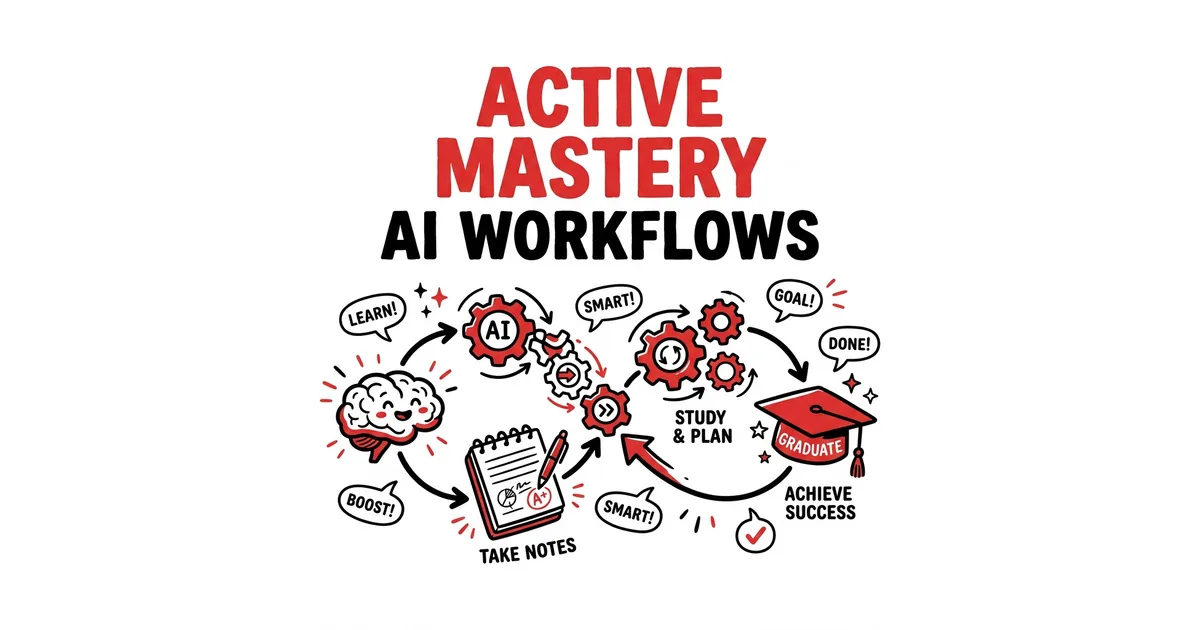
The shift from passive to active studying — already supported by decades of cognitive science — is being accelerated by AI. Apps that implement active recall automatically (like TikoNote's quiz generator) remove the friction that prevented most students from using evidence-based methods.
This is making the testing effect and spaced repetition accessible to students who'd never heard of them. That's genuinely significant.
Frequently Asked Questions
Are AI study apps cheating?
Using an app that explains concepts, quizzes you, or organizes your notes is the same category as using a textbook or tutoring service. Using AI to write your essay or solve your problem sets without learning is a different matter. The apps on this list are all in the first category.
Which AI study app is best for medical students?
TikoNote (for Feynman-style understanding + quiz generation from lecture notes) combined with Anki (for long-term retention of medical facts). These two together cover comprehension and memorization — the two pillars medical school requires.
Can AI study apps replace tutors?
For content explanation and practice question generation, they're approaching tutor-level effectiveness for many subjects. For essay feedback, motivation, and accountability — not yet. See our full breakdown: What Is an AI Study App and How Does It Improve Grades?
Are these apps compatible with all devices?
All apps listed have web access. TikoNote, Quizlet, Anki (Android/iOS), Otter.ai, and Perplexity all have mobile apps. Check individual apps for offline support.
How do I pick just one to start with?
Start with TikoNote if you want an all-in-one system. Start with Anki if you're a power user willing to invest setup time. Start with Quizlet if you just want something simple today.
The Bottom Line
The best AI study app is the one that replaces passive review with active learning — automatically. Every app on this list does that in some form.
Start with one. Use it consistently for two weeks. The research on why students study wrong shows the barrier isn't knowing the right method — it's habit. Pick one app and build the habit.
Put this into practice — right now.
Upload a PDF, lecture slide, or YouTube link. TikoNote instantly generates quizzes, flashcards, and a Feynman session from your own material — not generic internet content.
- ✓ Works on any PDF, video, or audio
- ✓ Active recall built-in — not passive summaries
- ✓ Used by 50,000+ students
Written by TikoNote Team
AI learning researchers & cognitive science enthusiasts building tools that help students study smarter with evidence-based methods like active recall, spaced repetition, and the Feynman Technique.