
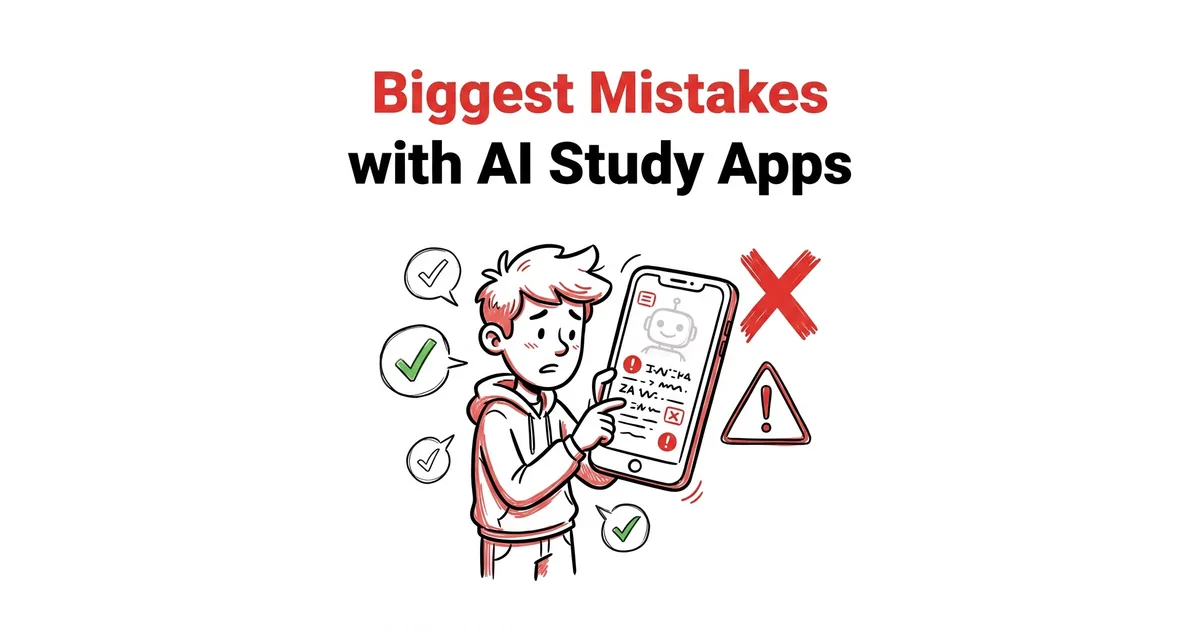
We are in the golden age of EdTech. With a single click, you can turn a 2-hour lecture into perfectly formatted notes, flashcards, and quizzes. But while the tools have evolved, human psychology hasn't. Many students are using AI in ways that feel incredibly productive but actually destroy their ability to learn.
If you are using AI study apps, make sure you aren't making these five grade-killing mistakes.
Mistake 1: Outsourcing the Initial Struggle
When you encounter a difficult math problem or a complex philosophical concept, your brain needs to struggle with it for a few minutes. That struggle signals to your brain that this information is important and needs to be encoded.
If you instantly snap a photo of a math problem and let the AI solve it within 5 seconds of getting stuck, you bypass the struggle. You will understand the AI's explanation perfectly in the moment, but you will completely blank when you see a similar problem on the exam.
The Fix: Apply the "5-Minute Rule." You are not allowed to ask the AI for help until you have wrestled with the concept for at least five solid minutes.
Mistake 2: Passive Consumption of AI Summaries
Asking an AI to summarize a 50-page PDF into three bullet points is incredibly satisfying. Reading those three bullet points makes you feel like you've mastered the material. You haven't.
This is the ultimate "illusion of competence." Recognition is not recall.
The Fix: Use summaries as a starting point, not the destination. After reading the summary, use the AI to generate a quiz on the summary to ensure you actually internalized the key points.
Mistake 3: Trusting Hallucinations
Even in 2026, Large Language Models occasionally hallucinate. They will confidently invent a historical date, misinterpret a nuanced legal ruling, or hallucinate a step in a biochemical pathway.
If you use generic AI chatbots (like the basic versions of ChatGPT or Claude) as your only source of truth, you will eventually memorize a falsehood.
The Fix: Only use AI study apps that ground their answers in your specific uploaded documents. Apps like TikoNote use RAG (Retrieval-Augmented Generation) to ensure that the flashcards and quizzes it generates are pulled strictly from your professor's syllabus, not the open internet.
Mistake 4: Generating Too Many Flashcards
Because AI can generate flashcards instantly, students often ask it to turn a single lecture into 200 flashcards. They then get overwhelmed by the sheer volume of cards to review and abandon their spaced repetition system entirely.
The Fix: Be specific with your prompts. Tell the AI: "Create exactly 15 flashcards focusing ONLY on the most critical, high-yield concepts from this PDF." Quality over quantity always wins in spaced repetition.
Mistake 5: Failing to Verify the Format
Not all knowledge should be a flashcard. Some knowledge needs a mind map, some needs a flowchart, and some needs a timeline.
Forcing the AI to turn a complex sequence of historical events into isolated Q&A flashcards strips away the context and narrative that helps you remember it.
The Fix: Ask the AI what format is best. Prompt: "I need to learn the events leading up to World War I. Should I use flashcards, a timeline, or a conceptual breakdown? Generate the best format."
Conclusion
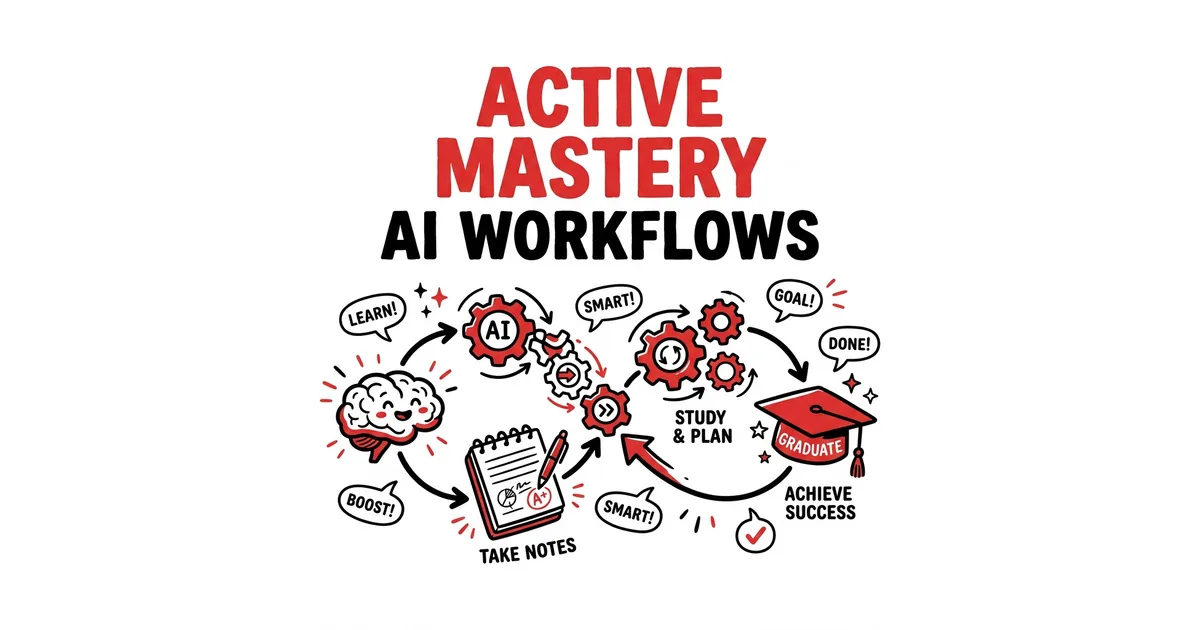
AI is a bicycle for the mind. It makes you faster, but you still have to pedal. Don't let the AI do the pedaling.
Put this into practice — right now.
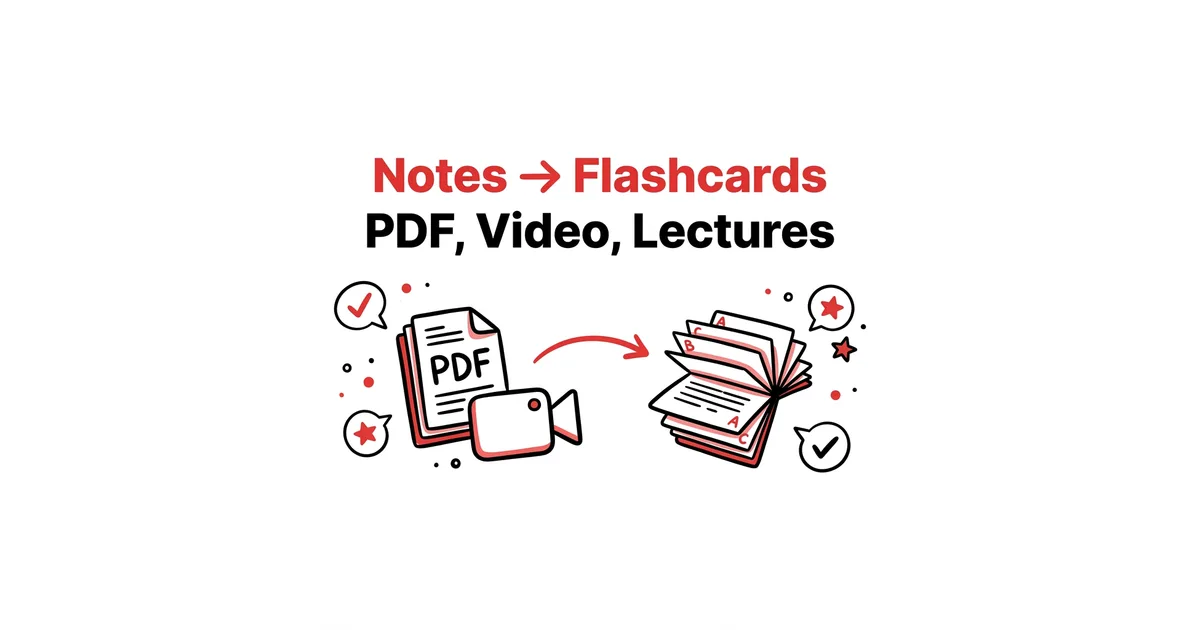
Upload a PDF, lecture slide, or YouTube link. TikoNote instantly generates quizzes, flashcards, and a Feynman session from your own material — not generic internet content.
- ✓ Works on any PDF, video, or audio
- ✓ Active recall built-in — not passive summaries
- ✓ Used by 50,000+ students
Written by TikoNote Team
AI learning researchers & cognitive science enthusiasts building tools that help students study smarter with evidence-based methods like active recall, spaced repetition, and the Feynman Technique.